Thirty-eight hours in, and the ocean floor still makes me stop breathing.
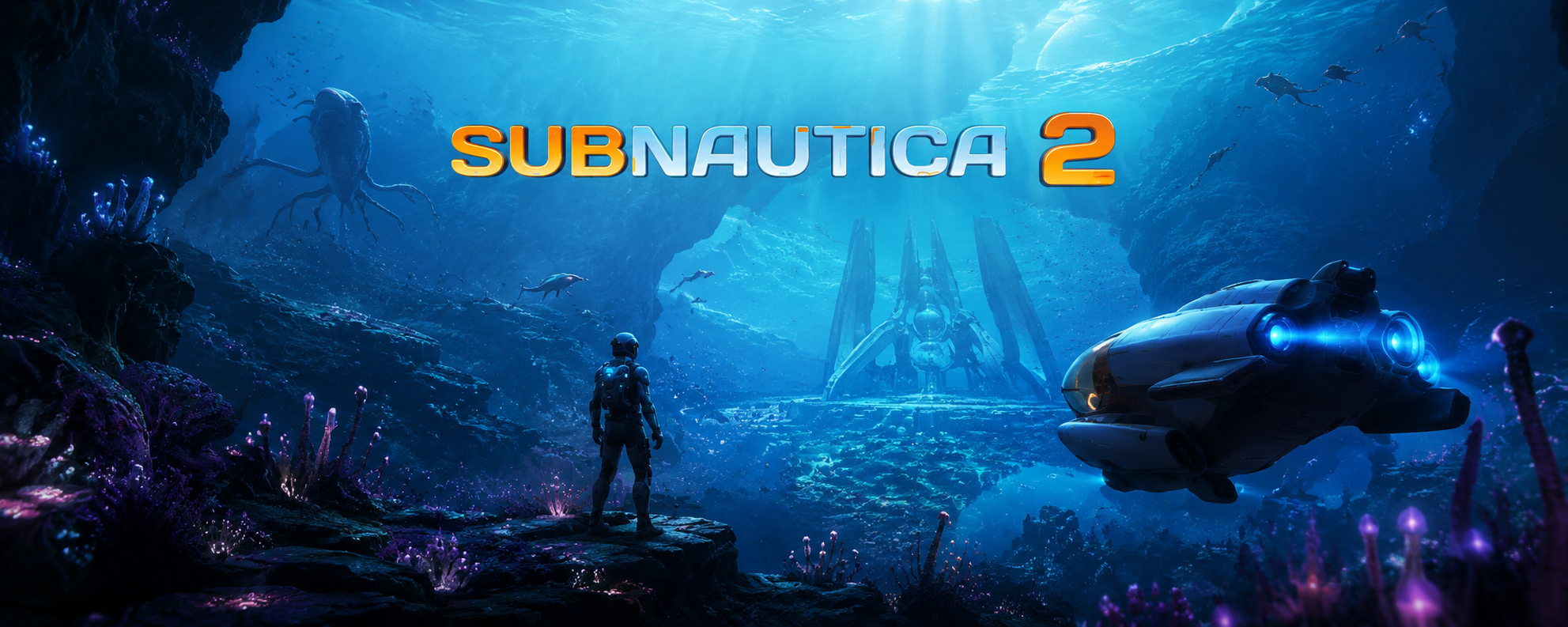
That’s the clearest endorsement I can give Subnautica 2: Unknown Worlds has not lost the knack for making silence feel enormous. You descend through a thermal layer, the ambient hum of your submarine drops, and for a moment it’s just you, a faint bioluminescent pulse from something large and patient, and several hundred metres of nothing below you. It’s a feeling the original pioneered and its sequel faithfully inherits — while doing enough new things to justify its existence.
What’s Here in EA1.0
The early access build ships with a sizeable starting region, three distinct biomes, a partial story spine, and — crucially — the full co-op infrastructure. The ocean of Subnautica 2 is wider and shallower in its initial zone than the original, opening into a vast kelp-lit expanse before plunging into the expected darkness. It’s a smart design choice: new players get daylight and breathing room; returning explorers learn quickly that comfort is temporary.
The co-op system is the headline addition and it lands well. Playing with a second person doesn’t break the tension — it redirects it. Instead of a lone voice-log protagonist, you have a collaborator to lose in fog, to call to when something large starts following you, to argue with about whether now is the time to dive deeper. The asynchronous terror of the original translates surprisingly cleanly into shared space.
Survival systems carry over with refinement. Oxygen, food, water, and temperature are all present; the crafting tree is more legibly structured this time, with clear tier gates that reduce the “scan everything, miss nothing” anxiety that newcomers found paralysing. Base modules snap together with more flexibility than the original allowed without sacrificing the sense that you’re building a fragile outpost rather than a fortress.
What’s Missing
The caveat is the content ceiling, and it is a real one. Around the twenty-hour mark the story scaffold becomes noticeably thin. Signals you follow lead to partial setpieces; a few data logs point toward regions not yet implemented. This is early access as advertised — Unknown Worlds have been transparent about the roadmap — but it means the back half of EA1.0 is structurally open-world freeform play rather than a guided narrative arc. For some players that’s fine. For others it will feel like the game stops mid-sentence.
The UI has rough edges. Inventory management on a controller is friction-heavy in ways that feel like carryover from the original’s PC-first design philosophy. Crafting deep in a multi-tiered menu while something is trying to eat your submarine is less thrilling than the game seems to intend it to be.
::: callout callout-info Early access context. This review reflects EA1.0 (June 2026). Unknown Worlds have already shipped three hotfixes and outlined EA1.1 content drops. Scores for early access titles reflect current state — expect the value proposition to improve meaningfully over the next six months. :::
The Verdict
Subnautica 2 earns its early access launch. The foundation is excellent — the world-building, the creature design, the co-op integration, the survival loop — and the team has demonstrated with the original that they know how to ship a complete game. What you’re buying in June 2026 is an exceptional first act and a confident development trajectory.
If you loved the original and want more of it with a friend, buy it now. If you’re waiting for the full-depth story experience, bookmark it and return in twelve months. Either position is reasonable. The ocean is worth your time; the question is only when you want to dive in.